

Introducing Halo GSS: Bring reviews, AI sentiment, comp sets, and rate intelligence into one view so you can stop guessing whether the next move is pricing, service recovery, or a property-level fix.






Reviews are a marketing channel AND operational signals that can affect guest confidence, pricing power, and how quickly a property team knows what needs attention.

So every property knows what changed, who should respond, and what needs to be fixed before the next guest says the same thing.
Halo GSS pulls Google, TripAdvisor, Booking, Yelp, and Expedia reviews into one review inbox, with filters for source, sentiment, response status, and date. Managers can work from a single queue instead of chasing portals, and AI-drafted responses help teams reply faster without losing the property voice.

A rating drops, and the team starts guessing. Was it breakfast? Cleanliness? Staff friendliness? A check-in bottleneck? The comments are there, but they are buried in hundreds of reviews across OTAs and review sites. You tell AI to get it for you, but then you have to connect it to the WHY. By then, the issue has already shown up in ranking, conversion, and owner calls.
Halo GSS organizes guest sentiment into 11 categories so teams can see what is actually driving perception at the property level. Instead of treating every negative review as a one-off, managers can see whether cleanliness, service, value, amenities, location, or another category is moving the score.

Most hotels have a comp set, but not every comp set still reflects how guests choose. New competitors open. Renovated properties re-enter the market.
A hotel that looked comparable on paper may not be the one guests actually compare on price, location, reputation, and brand expectation. When the comp set is wrong, every rate and performance conversation starts from a distorted baseline.
CoStar/STR's competitive set guidelines show the industry treats comp set composition as a governed, high-stakes comparison problem.AND Hospitality Net notes that distance, market segment, service quality, online reputation, and ADR all affect true competitive selection.
So you can compare against real substitutes instead of last year's spreadsheet.
Halo GSS helps teams discover and save competitor sets using market search logic, property context, and competitive signals. Teams can create multiple saved comp sets per property, review suggested competitors, and use site analysis to understand the local market before treating any set as final.

So revenue and operations can agree on whether to move price, fix experience, or do both.
Halo GSS pairs competitor rate context with guest sentiment so teams can see where price and perception disagree. A hotel may be underpriced relative to a weaker competitor, or overpriced while losing ground on cleanliness, service, or value. The point is not more data. It is a clearer rate decision.
Portfolio teams need a way to see which guest-perception issues are actually changing the business story, so the next owner conversation is grounded in performance instead of assembled from separate reports.
Halo GSS connects guest perception, competitor pricing, and HIA performance context so portfolio leaders can see which reputation signals actually matter to the business.
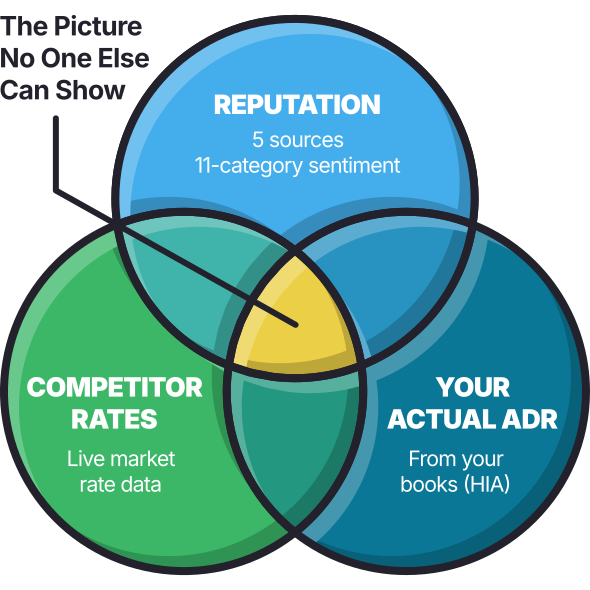

Next Level: Pair with HIA where configured. Use HIA-connected performance context to compare guest perception and competitor rate signals against actual operating results.