


A guest satisfaction survey can tell hotel teams what guests experienced before the next public review appears. But the survey itself is not the operating win.
The win is what happens after the guest answers.
For hotel operators, survey feedback becomes useful when it connects to reviews, sentiment, response coverage, comp-set context, and property action. Halo GSS helps teams bring the public guest story into one workflow today, with surveys noted on the Halo roadmap.
A Guest Satisfaction Survey Should Not Become Another Silo
Hotels already hear from guests in too many places. A guest may answer a post-stay survey, leave a Google review, respond through an OTA, mention an issue to the front desk, or send a direct message after checkout.
Each signal matters. The problem is that each signal usually lands in a different place.
That is why a guest satisfaction survey should not be treated as a separate reporting exercise. If survey answers live away from public reviews, response status, sentiment trends, and property follow-up, managers still have to piece the story together by hand.
Expedia Group hotel guest reviews guidance shows why the guest story deserves operational attention: 55% of U.S. and UK travelers who recently visited Expedia said positive reviews are important when choosing accommodations.
That does not mean survey data and reviews are the same thing. Surveys are structured. Reviews are public and often more narrative. Together, they help a hotel understand both the measured experience and the story future guests may see.
Ask Questions That Point To Action
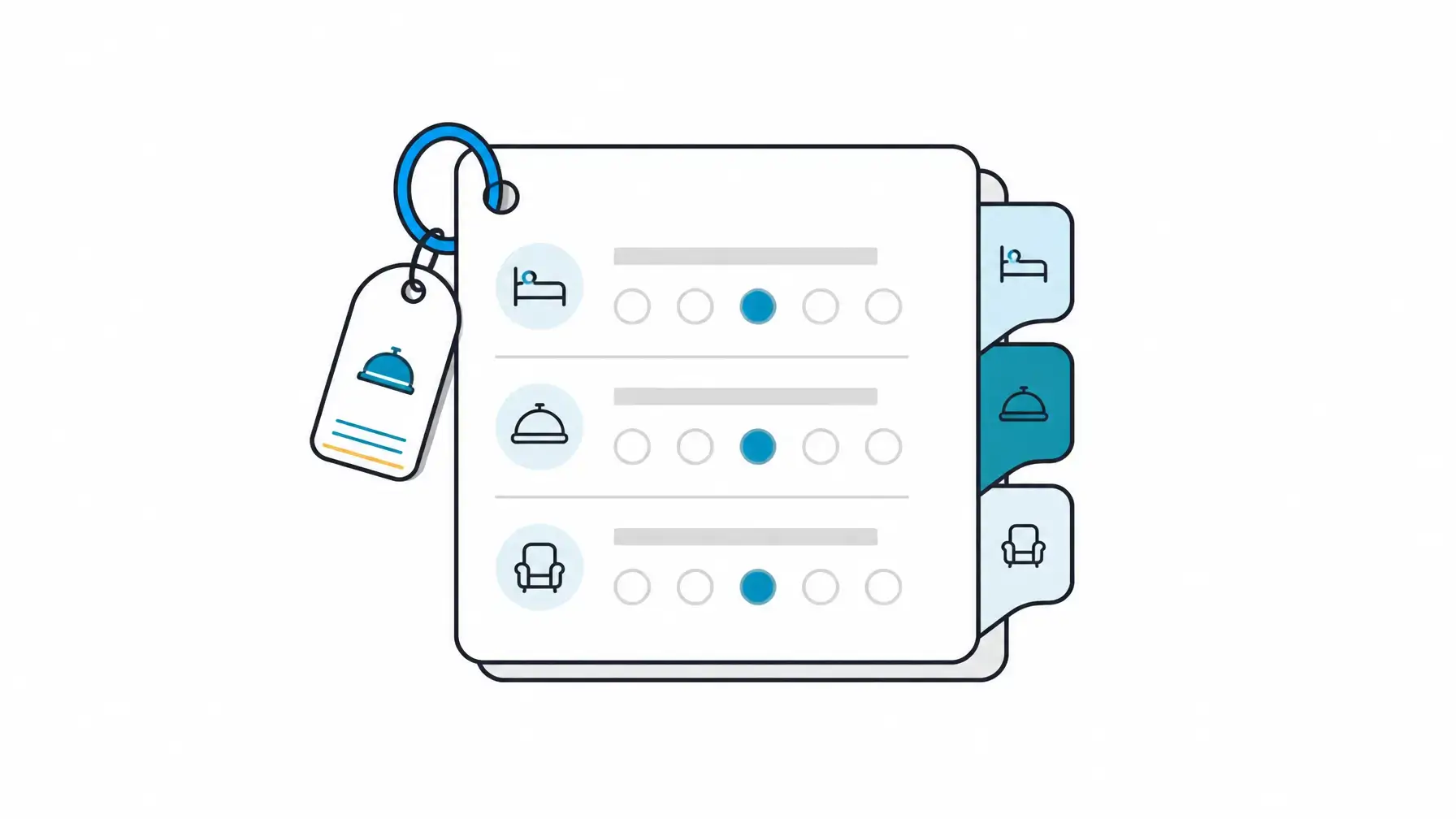
The weakest guest satisfaction survey asks broad questions and leaves managers with vague averages.
Was the stay good?
Would the guest recommend the property?
Was the staff friendly?
Those questions can be useful, but only if the hotel can connect the answer to a decision. A better survey structure separates the parts of the stay that teams can actually improve: cleanliness, check-in, service, room condition, value, amenities, breakfast, location expectations, and issue recovery.
Expedia public content guidelines say travelers can submit sub-scores for specific aspects of a stay, including cleanliness, staff, breakfast, and location. That is a useful model for operators. The closer feedback gets to the actual guest moment, the easier it is to coach the right team.
Halo GSS uses 11-category sentiment analysis for guest review feedback. That same discipline matters for surveys: do not stop at a score when the real value is the driver behind the score.
Pair Survey Feedback With Public Reviews
A guest satisfaction survey can catch issues that never become public. Reviews show what guests were motivated to publish.
Hotel teams need both views.
If survey scores are soft but public reviews remain strong, the property may have a private service issue that can still be corrected quietly. If survey answers and public reviews both point to cleanliness, the issue is no longer anecdotal. If survey feedback says value is weak while the hotel is priced above the comp set, the revenue conversation changes.
Tripadvisor 2025 Transparency Report says the platform received nearly 80 million traveler contributions in 2024, including 31.1 million reviews. Public guest feedback is too large and visible to manage casually.
That is why Halo GSS starts with review aggregation across major sources including Google, TripAdvisor, Booking, Yelp, and Expedia. The Halo GSS pricing page also states that surveys are on the roadmap. The practical direction is clear: survey feedback should sit beside the guest-review workflow, not outside it.
Feedback Needs Ownership, Not Just Reporting

The common failure is familiar: a survey report goes out, everyone sees the same numbers, and no one owns the next action.
That is not a reporting problem. It is a workflow problem.
A useful guest satisfaction process should answer four questions quickly:
- What did the guest say?
- What part of the stay does it affect?
- Who owns the response or fix?
- Has the issue been closed?
Response coverage matters here. Hotel Management reported research showing that hotels that began responding to reviews received 12% more reviews and saw average ratings increase by 0.12 stars. The exact result will vary by property and market, but the operating lesson is steady: guest feedback needs a managed response loop.
AI can help draft responses and summarize patterns, but managers still need control. The best workflow reduces blank-page work while preserving local judgment, property voice, and escalation discipline.
Halo GSS supports that kind of work with a centralized review inbox, response status visibility, AI-drafted responses, alerts, and multi-property comparison.
Use Satisfaction Data To Coach The Property
A guest satisfaction survey is most valuable when it changes the property conversation.
For a GM, survey feedback can show where the team needs coaching this week. For a regional leader, it can show whether an issue is isolated or repeating across several hotels. For a revenue manager, it can explain why guests resist the rate. For ownership, it can turn reputation movement into a credible business explanation.
J.D. Power 2026 North America Hotel Guest Satisfaction Study benchmarks 104 hotel brands and is based on responses from 44,787 branded hotel guests. It also found overall satisfaction improved 13 points on a 1,000-point scale, with value for price paid improving 18 points.
That context matters because hotel satisfaction is not one thing. Value, room condition, food and beverage, service, staff, and facility upkeep all affect how the guest judges the stay. Operators need category-level visibility before they can coach well.
Owners Need The Business Story Behind The Score

Owners and finance leaders do not usually need every survey answer. They need to know what guest feedback means for performance, risk, and property priorities.
If guests keep mentioning value, does the hotel need a pricing conversation, a service fix, or clearer expectation-setting?
If cleanliness sentiment drops, is it isolated to one property or visible across the region?
If public reviews stay strong while survey answers weaken, is the team catching issues before they hurt reputation?
That is where Halo GSS becomes more than a review queue. Its reputation, sentiment, comp-set, and rate intelligence helps property, regional, revenue, and ownership teams talk from the same guest story.
The HIA-connected portfolio story can go further when configured. Halo GSS explains that it was built to connect guest perception, competitor pricing, and HIA performance context so hotel teams can see which reputation signals are changing the business story.
HIA customer Jeff Desai put the value of connected intelligence plainly: “This is exactly the intelligence tool we were looking for at Baywood. It is so helpful to see the different KPIs at a glance and have the flexibility to segregate the data and drill down for deep analysis.”
That is the standard survey feedback should meet. Not more data for its own sake. Better operating explanation.
What Strong Guest Satisfaction Survey Workflow Looks Like
Strong survey work has a few recognizable patterns:
- Survey questions map to parts of the stay managers can improve.
- Public reviews and private survey answers are reviewed together.
- Feedback is categorized by sentiment and issue type.
- Managers can see response status and follow-up ownership.
- Regional leaders can compare properties without building manual reports.
- Revenue teams can view guest perception beside rate and comp-set context.
- Owners get a business summary, not a disconnected survey export.
- Survey capability is treated as part of the broader guest-feedback workflow, not a standalone project.
That is how guest satisfaction survey feedback becomes management work.
Key Takeaways
- A guest satisfaction survey is useful only when it leads to action.
- Structured survey answers and public reviews should be analyzed together.
- Category-level feedback helps managers move from scorekeeping to coaching.
- Halo GSS already connects reviews, sentiment, comp sets, rate intelligence, and response workflow, with surveys on the roadmap.
- Portfolio leaders need guest feedback translated into owner-ready business context.
FAQ
What is a guest satisfaction survey?
A guest satisfaction survey is a structured way to ask hotel guests about their stay. It usually covers areas such as cleanliness, service, room condition, value, amenities, breakfast, location, and issue recovery.
Why do hotels use guest satisfaction surveys?
Hotels use guest satisfaction surveys to identify what guests experienced before issues become recurring complaints or public review patterns. The survey helps managers find coaching opportunities and track whether property changes are improving the stay.
How is a guest satisfaction survey different from an online review?
A survey is structured feedback requested by the hotel. An online review is public feedback posted by the guest on a review or booking platform. Hotels need both because surveys can reveal private signals while reviews influence future guests.
What should a hotel ask in a guest satisfaction survey?
A hotel should ask questions that point to action: cleanliness, check-in, staff service, room condition, value, amenities, breakfast, location, and whether any issue was resolved. Broad satisfaction questions are useful only when they can be tied to specific follow-up.
When should hotels send a guest satisfaction survey?
Most hotels send surveys shortly after checkout while the stay is still fresh. The timing should give guests enough room to answer thoughtfully while giving managers a chance to respond before the issue fades or appears publicly.
Who should own guest satisfaction survey follow-up?
Ownership depends on the issue. GMs usually own property-level response and service recovery. Regional leaders coach recurring patterns. Revenue managers use value and sentiment signals for pricing confidence. Owners and finance leaders need the business explanation.
How does sentiment analysis help with survey feedback?
Sentiment analysis helps teams understand the driver behind the score. Instead of only knowing that satisfaction moved, leaders can see whether guests are reacting to cleanliness, service, value, amenities, location, or another stay category.
Should survey data be compared against comp sets?
Yes, when the goal is a business decision. Guest satisfaction means more when leaders understand how the property compares against realistic competitors on reputation, rate, and perceived value.
Does Halo GSS include guest satisfaction surveys?
Halo GSS currently focuses on review aggregation, AI sentiment, response workflows, comp sets, rate intelligence, dashboards, and multi-property comparison. The Halo GSS pricing page states that surveys are on the roadmap and will be added to the Professional tier upon release.
How does Halo GSS support guest satisfaction work today?
Halo GSS helps teams manage the public guest-feedback workflow today by bringing major review sources, sentiment analysis, AI-drafted responses, response status, comp sets, rate intelligence, alerts, and portfolio comparison into one place.