


Guest experience software should help a hotel understand what guests are saying, why they are saying it, and what action should happen next.
That is harder than it sounds. Guest feedback shows up in public reviews, OTA comments, surveys, direct messages, front-desk notes, and owner conversations. The useful software is not the tool that creates another inbox. It is the system that turns those signals into operating decisions.
Guest Experience Software Has To Fit Hotel Operations
A hotel guest experience is public, local, and operational. One comment can touch housekeeping, front desk staffing, breakfast, room condition, value perception, rate strategy, and future bookings.
Generic customer experience platforms can help collect feedback, but hotels need a narrower operating lens. The team needs to know whether a review is new, whether it has been answered, what issue category it belongs to, whether the pattern is repeating, and how the property compares with nearby alternatives.
Halo GSS is built around that hotel-specific need. It brings reviews, AI sentiment analysis, response work, comp-set comparison, rate intelligence, alerts, and portfolio visibility into one guest experience workflow.
That matters because the guest story does not stay inside the property. Expedia Group says 55% of U.S. and UK travelers who recently visited Expedia said positive reviews are important when choosing accommodations. The experience becomes part of the next booking decision.
Bring Guest Feedback Into One Operating Queue

The first practical requirement is review consolidation.
When managers have to check Google, Tripadvisor, Booking.com, Expedia, Yelp, and other sources separately, response coverage becomes uneven. A good comment may never reach marketing. A service complaint may sit unanswered. A regional leader may not know which property is behind.
Guest experience software should make the queue visible. New feedback, response status, issue category, property ownership, and escalation needs should be easy to scan without rebuilding a spreadsheet.
The volume of public feedback makes this more than a convenience problem. The 2025 Tripadvisor Transparency Report says travelers contributed 79.7 million pieces of content in 2024, including 31.1 million reviews. A hotel team does not need more tabs. It needs a repeatable way to sort the guest signal.
Halo GSS supports that workflow with review aggregation and a centralized inbox, so managers and portfolio leaders can see what has arrived and what still needs action.
Use Sentiment To Explain What Changed
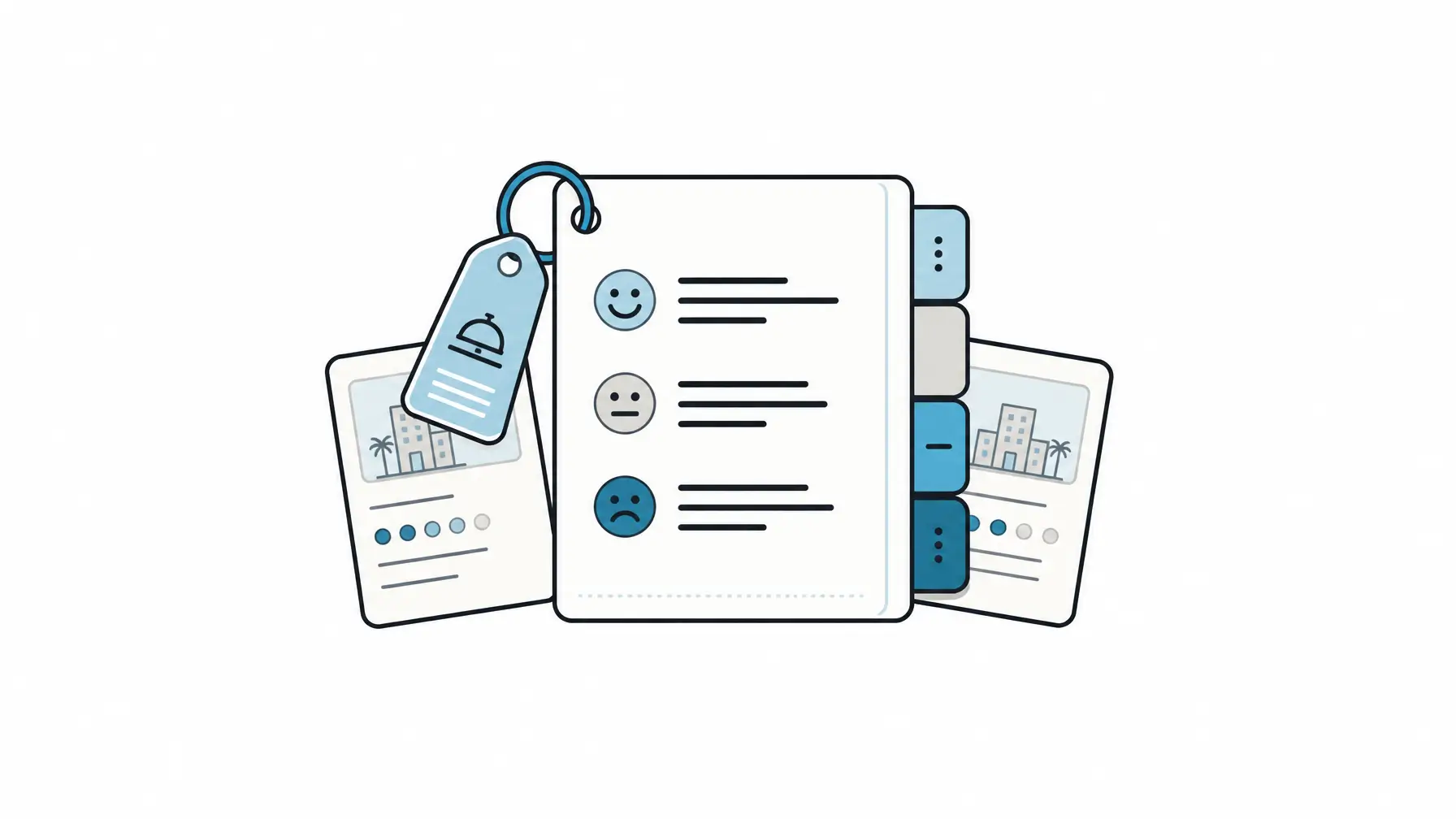
A score is a signal, but it is not an explanation.
If a property rating falls, the team still needs to know what moved. Was it cleanliness, service, value, breakfast, room condition, staff responsiveness, location expectations, or something else? One review can contain several of those issues at once.
Halo GSS uses 11-category AI sentiment analysis to help teams classify the driver behind the review. The purpose is not to replace the manager. It is to reduce manual sorting so the manager can focus on the right issue faster.
Good guest experience software should help answer practical questions:
- Which issue categories are getting worse?
- Which properties are improving and which are slipping?
- Are value complaints rising while rates are also moving?
- Has the team responded to the reviews that need attention?
- Is this a one-property issue or a portfolio pattern?
That is where guest experience software becomes operational instead of decorative.
Compare Guest Experience Against The Right Comp Set
Hotels do not compete against averages. They compete against nearby properties that guests can choose instead.
That is why comp-set context belongs inside hotel guest experience software. A reputation score means more when it sits beside similar properties. A value complaint means more when the hotel is priced above the comp set. A service improvement means more when competitors are flat.
Halo GSS pricing describes the Professional tier around review aggregation, AI-powered review responses, advanced analytics, competitor tracking, portfolio dashboards, multi-property comparison, and rate intelligence. That combination is important because guest perception and pricing often shape the same decision.
Revenue leaders need to know whether the guest story supports the rate. Operators need to know whether complaints are isolated, recurring, or competitive. Owners need a clearer explanation than a screenshot of reviews.
Response Workflow Needs Clear Ownership
Guest experience work breaks down when no one can see the status.
A review may need to be read, drafted, approved, answered, escalated, or watched for a recurring issue. If that ownership is unclear, response quality depends on memory and manual follow-up.
Research reported by Hotel Management found that hotels that began responding to reviews received 12% more reviews and saw average ratings improve by 0.12 stars. The exact result will vary by property, but the operating lesson is clear: response discipline can change the visible guest conversation.
Halo GSS supports response work with a centralized review inbox, AI-drafted responses, alerts, and response status. AI is useful here when it shortens blank-page work and helps teams move faster. The property still owns accuracy, judgment, escalation, and tone.
For related response guidance, Halo GSS also covers hotel review response and hotel review management.
Give Owners The Business Story Behind The Guest Score

Owners and finance leaders usually do not need every comment. They need the business story behind guest perception.
If value sentiment falls while ADR rises, leadership needs to see the pricing and service context together. If cleanliness complaints rise at one hotel, a portfolio operator needs to know whether the issue is isolated or recurring. If reputation improves but rate performance lags, revenue and operations need the same facts in the room.
The 2026 J.D. Power North America Hotel Guest Satisfaction Study was based on responses from 44,787 branded hotel guests and benchmarked 104 hotel brands. It reported overall satisfaction improved 13 points on a 1,000-point scale, while value for price paid improved 18 points.
That kind of benchmark reinforces the operating point. Guest experience is made of specific drivers. Guest experience software should help hotel leaders explain those drivers in business terms.
The HIA-connected portfolio story can go further when configured. The Halo GSS about page explains that Halo GSS was built to connect guest perception, competitor pricing, and HIA performance context so hotel teams can see which reputation signals are changing the business story.
HIA customer Jeff Desai described the value of connected intelligence this way: “This is exactly the intelligence tool we were looking for at Baywood. It is so helpful to see the different KPIs at a glance and have the flexibility to segregate the data and drill down for deep analysis.”
What To Look For In Hotel Guest Experience Software
Strong hotel guest experience software should make the work easier to manage, not just easier to report.
Look for software that can centralize public reviews, classify sentiment, show response status, compare comp sets, add rate context, support property and portfolio views, and help leaders explain what changed.
The test is simple: can the system help a GM, regional leader, revenue manager, and owner look at the same guest signal and understand the next decision?
For hotel teams comparing adjacent workflows, Halo GSS also has practical guides to hotel guest experience, online reputation management, and reputation management for hotels.
Key Takeaways
- Guest experience software should connect feedback to operating decisions, not create another inbox.
- Hotels need reviews, response status, sentiment drivers, comp-set context, and rate context in one workflow.
- Public reviews matter because they shape future booking decisions.
- Halo GSS gives hotel teams one workflow for reviews, AI sentiment, responses, comp sets, rate intelligence, and portfolio visibility.
- Owners need the business explanation behind the guest score, not disconnected screenshots.
FAQ
What is guest experience software?
Guest experience software helps teams collect, organize, analyze, and act on guest feedback. For hotels, that usually includes public reviews, sentiment trends, response workflows, alerts, comp-set context, and reporting for property and portfolio leaders.
How is guest experience software different from reputation management software?
Reputation management software usually focuses on public reviews and ratings. Guest experience software should go wider by connecting those reviews to operating issues, service patterns, response ownership, competitor context, and business decisions.
Why do hotels need guest experience software?
Hotels need guest experience software because guest feedback is spread across public channels and internal workflows. A central system helps teams see what guests are saying, what needs a response, which issues are repeating, and where leadership should act.
What should hotel guest experience software track?
It should track review sources, new feedback, response status, sentiment categories, issue trends, comp-set movement, rate context, alerts, and portfolio performance. The goal is to make the next operating decision clearer.
How does sentiment analysis help hotel teams?
Sentiment analysis helps hotel teams understand the driver behind a rating or review. Instead of only seeing an average score, managers can identify whether guests are reacting to cleanliness, service, value, room condition, amenities, or another part of the stay.
Should AI draft hotel review responses?
AI can help draft hotel review responses, but managers should still review accuracy, escalation needs, and tone. The best use is to reduce blank-page work while keeping the property in control of the final answer.
Why does comp-set context matter for guest experience?
Comp-set context shows whether a guest experience trend is strong or weak relative to realistic competitors. It helps teams understand whether a score movement is a property problem, a competitive problem, or a market signal.
Can guest experience software help revenue teams?
Yes, when it connects guest perception to pricing and competitive context. If value complaints rise while rates are above nearby competitors, revenue teams need that signal before making pricing decisions.
How does Halo GSS support guest experience work?
Halo GSS supports guest experience work with review aggregation, AI sentiment analysis, AI-assisted responses, competitor tracking, rate intelligence, portfolio dashboards, alerts, and multi-property comparison.
Does Halo GSS include surveys?
Halo GSS currently focuses on review aggregation, AI sentiment, response workflows, comp sets, rate intelligence, dashboards, alerts, and multi-property comparison. The Halo GSS pricing page states that surveys are on the roadmap and will be added to the Professional tier upon release.